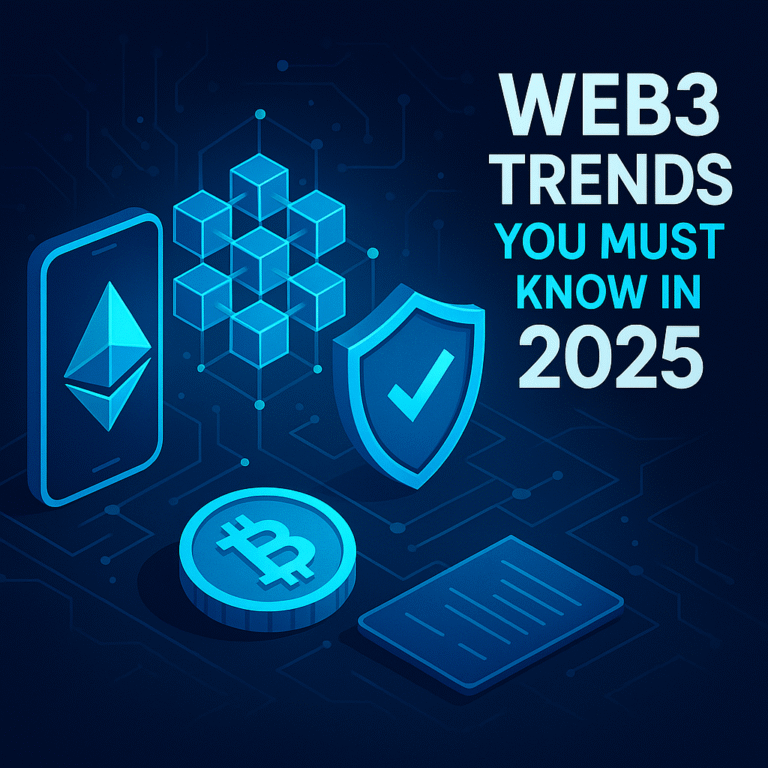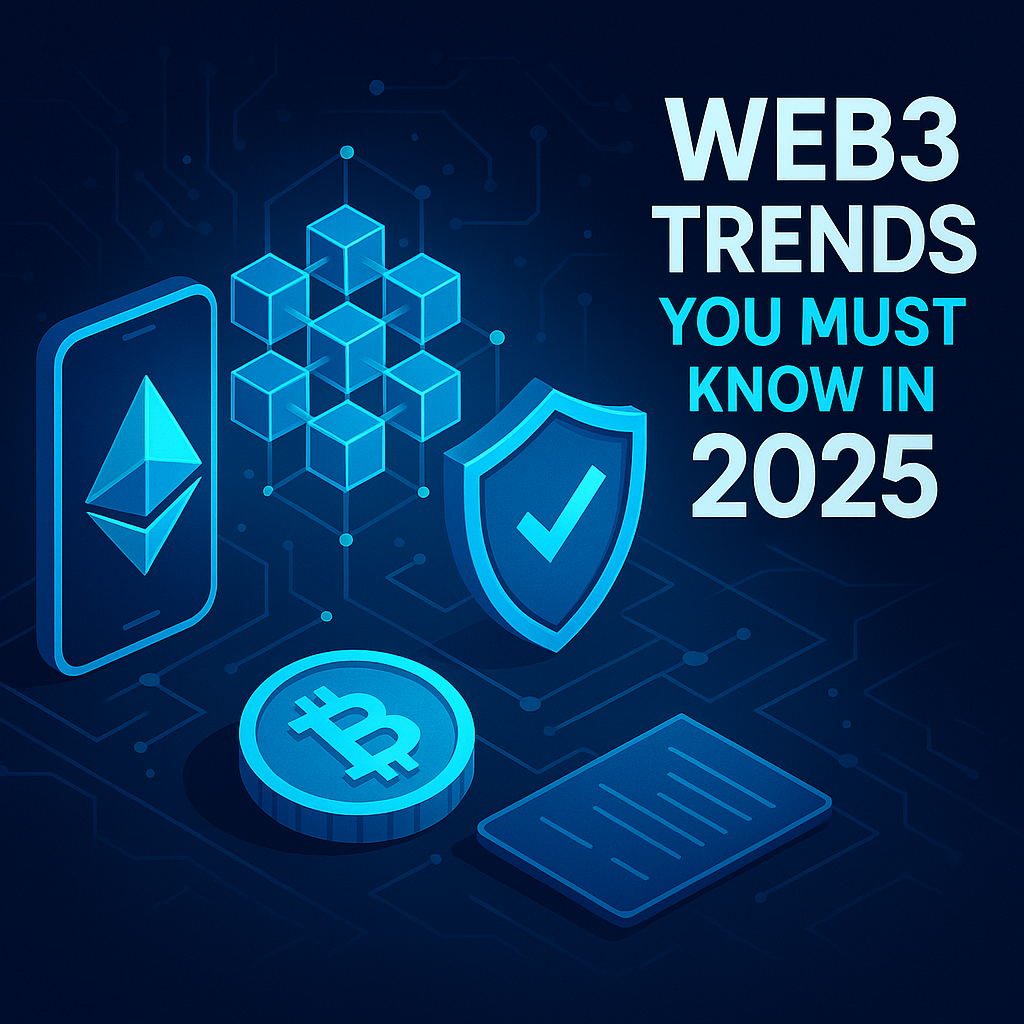
Web3 is one of the most transformative shifts happening in the digital world. It represents the next generation of the internet — an internet where users have ownership, control, and privacy, unlike the centralized Web2 world dominated by big corporations. In 2025, Web3 continues to grow rapidly, bringing new innovations, smarter blockchain networks, decentralized identity solutions, tokenized systems, and AI-powered automation.
This guide covers the most important Web3 trends of 2025 that everyone — creators, developers, businesses, and everyday internet users — must know. Whether you’re a beginner or an experienced tech enthusiast, these trends will shape the future of the digital landscape.
1. Mass Adoption of Blockchain Infrastructure
In 2025, blockchain is not just about cryptocurrencies — it powers:
- digital identity
- secure payments
- decentralized apps (dApps)
- gaming ecosystems
- supply chain systems
- enterprise automation
- healthcare records
- government verification
Its fast, efficient, and secure structure allows companies to use Web3 infrastructure for real-world tasks.
Why this trend is important:
- Cheaper transactions
- Higher transparency
- Tamper-proof data
- Global banking without banks
- Smart and automated contracts
Blockchain is becoming the backbone of digital transformation in 2025.
2. Rise of Decentralized Digital Identity (DID)
Privacy is one of the biggest concerns of 2025. People no longer want to share private details with centralized platforms like Google, Meta, or banks.
This is where Decentralized Identity (DID) becomes important.
Users can have:
- self-owned identity
- encrypted credentials
- zero-knowledge authentication
- login without sharing personal data
Wallets like MetaMask, Coinbase Wallet, Unstoppable Domains, and World ID are becoming digital passports for the Web3 world.
Why DOES DID matter?
- No need to rely on centralized companies
- Users control their own data
- Makes login secure
- Reduces identity theft
- Protects privacy
2025 is the year decentralized identity goes mainstream.
3. Tokenization of Real-World Assets (RWA)
One of the fastest-growing trends is the tokenization of real-world assets, where physical things are converted into blockchain tokens.
Examples:
- Real estate
- Gold and silver
- Stocks and bonds
- Luxury items
- Artwork
- Intellectual property
- Business ownership
These asset-backed tokens make investing easier and more accessible for everyone.
Benefits:
- Fractional ownership
- Global accessibility
- Lower entry cost
- Transparency
- Fast transactions
This trend will redefine investment markets in 2025.
4. Web3 Gaming & Play-to-Earn Evolution
Web3 gaming is no longer the simple “play-to-earn” idea of 2021. In 2025, it has become a full ecosystem:
- real economies
- digital land ownership
- NFT marketplaces
- interoperable avatars
- AI-generated game mechanics
Games like Axie Infinity, Illuvium, The Sandbox, and Star Atlas have evolved into Web3 worlds with actual value.
Why Web3 gaming is growing:
- Players own in-game assets
- Rewards can be traded or sold
- Cross-game items
- Real money earnings
Gaming is becoming one of the biggest use cases for blockchain.
5. AI + Web3 Integration
2025 brings a powerful combination: AI + Web3.
AI handles:
- automation
- data processing
- content creation
- predictions
- optimization
Web3 adds:
- transparency
- decentralized ownership
- fair distribution
- tamper-proof data
Together, they create intelligent, secure systems that no single company controls.
Examples of AI + Web3 platforms:
- decentralized AI marketplaces
- AI-generated NFTs
- blockchain-verified AI datasets
- AI smart contracts
This fusion is a massive trend shaping 2025.
6. Growth of Layer 2 Blockchains
Layer 2 platforms solve blockchain problems like:
- slow speed
- high fees
- network congestion
Popular Layer 2 networks in 2025:
- Polygon
- Arbitrum
- Optimism
- Base
- zkSync
- ImmutableX
Benefits of Layer 2:
- Faster transactions
- Lower gas fees
- Scalability
- Better user experience
Layer 2 is essential for future Web3 growth.
7. Decentralized Social Media (DeSo)
Web2 social media collects data and controls user content.
Web3 social platforms give users:
- ownership of posts
- control of monetization
- no censorship
- privacy protection
2025 Web3 social examples:
- Lens Protocol
- Friend.tech
- Minds
- Farcaster
- Bluesky
Creators can earn directly from fans — without middlemen.
8. Cross-Chain Interoperability
Before 2024, blockchains were isolated.
In 2025, they now communicate seamlessly.
Interoperability tools:
- Polkadot
- Cosmos
- Chainlink CCIP
- LayerZero
This allows:
- cross-chain swaps
- multi-chain NFTs
- shared liquidity
- universal Web3 identity
The Web3 world is moving toward full connectivity.
9. Stablecoins Becoming Mainstream
Stablecoins (USDT, USDC, DAI) are becoming global digital money.
People use them for:
- fast payments
- online shopping
- international salaries
- freelance payments
- crypto trading
- savings
Stablecoins are much faster and cheaper than banks.
2025 will see government-backed CBDCs also rising.
10. Web3 for Businesses & Enterprises
Companies are now adopting Web3 for:
- customer loyalty programs
- transparent supply chains
- secure data storage
- digital ownership of products
- tokenized memberships
Brands like Nike, Adidas, Starbucks, Coca-Cola, and Meta are already investing in Web3.
Why companies are switching:
- lower cost
- better data security
- customer reward systems
- global reach
- automation via smart contracts
Web3 is becoming a business necessity in 2025.
11. NFT Evolution: Utility > Art
In 2021, NFTs were mostly about images and artwork.
In 2025, NFTs are utility-based, used for:
- event access passes
- certificates
- memberships
- game items
- digital identity
- ticketing systems
- loyalty points
NFTs are now a practical tool, not just collectibles.
12. Decentralized Cloud Storage
Traditional cloud storage (Google Drive, Dropbox) is centralized.
Web3 cloud storage is:
- cheaper
- encrypted
- decentralized
- faster
Popular decentralized storage solutions:
- IPFS
- Filecoin
- Storj
- Arweave
Web3 storage is the future of digital data protection.
Conclusion
The Web3 revolution is not slowing down — it’s accelerating.
2025 marks a turning point where blockchain, AI, decentralized identity, tokenization, gaming, and cross-chain technology unite to create a smarter internet.
If you want to stay ahead in the digital world, now is the time to learn Web3 skills and explore decentralized platforms.
Web3 is not just a trend — it is the future of the internet.
About the Author